Image: alanpfitch
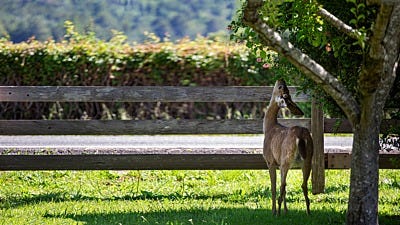
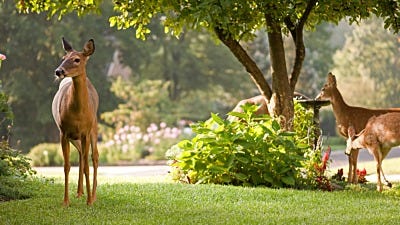
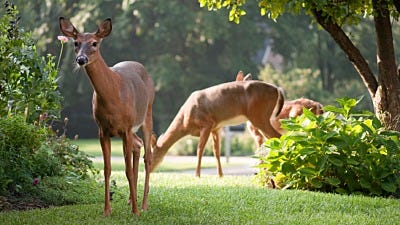
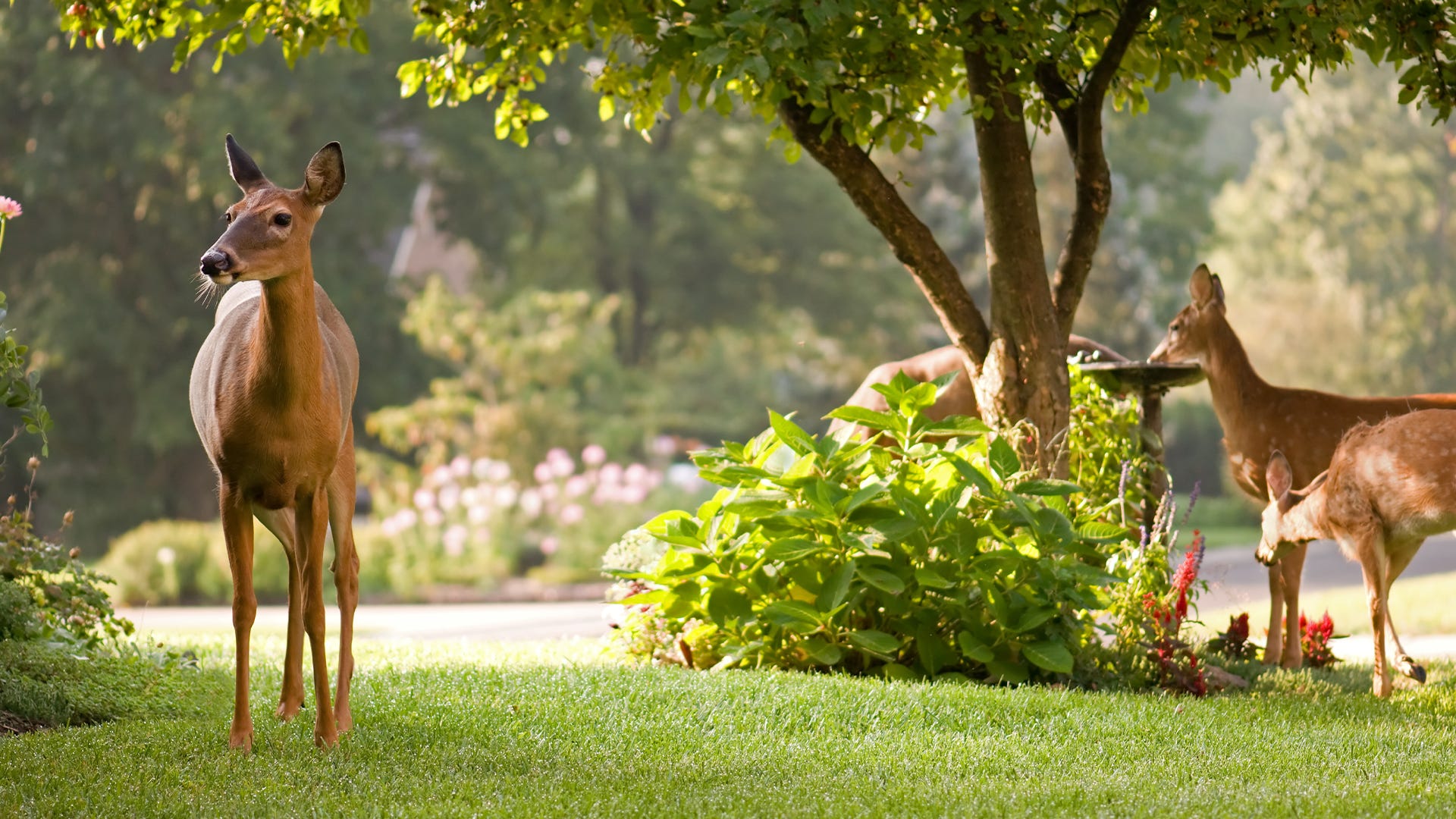
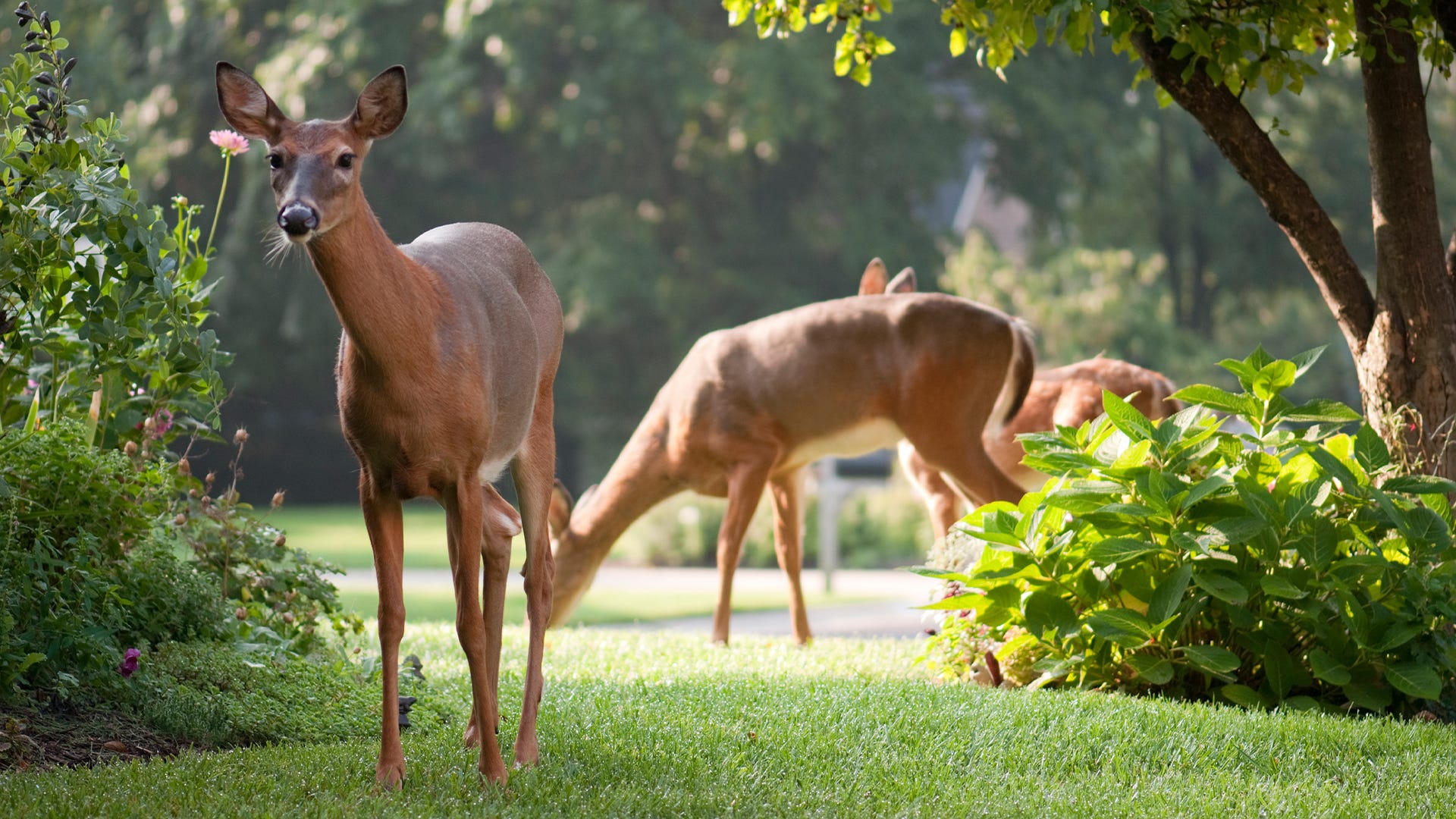
My aunt, when faced with a deer problem, specifically deer eating her roses, tried to plant a few deer proof bushes and shrubs. She also tried keeping deer away by bringing in shrubs that weren’t native to her area. Just like we humans develop a fondness for Mom’s special “Tuna Surprise,” the thought was deer only develop a taste for regional shrubs.
It worked … sort of. The deer didn’t do much damage to the deer proof shrubs, but they did continue eating the other plants, including her roses. Turns out, deer proof shrubs won’t create some invisible shield of protection for your yard. She also found that in the winter when deer were hungry and desperate, they’d eat even those deer proof shrubs.

Landscaper Secret
One of the best secrets for deer proofing your trees is to plant mature trees. While they cost more, they won’t be destroyed because they are too high for the deer to reach and destroy. Picture this: a deer on its hind legs munching away. While it’s almost comical, it does happen, so whenever possible, plant the hard-for-deer-to-resist plants and flowers up high.
Dog Owner Secret
Turns out, dog owners have less trouble with deer. A garden that has a dog is a better-protected garden. So, if you were thinking about getting a dog, here’s a reason why you might want to. A dog also makes a much better companion than a supposedly deer-resistant shrub!
Deer Repellents instead of Deer Proof Shrubs
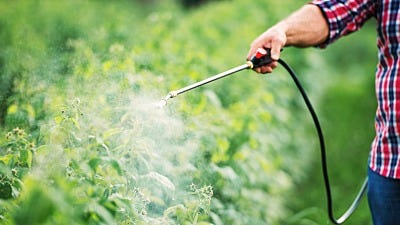
Since deer proof shrubs aren’t really deer-proof, and they definitely don’t possess the ability to protect all the other plants in your yard, you should consider one of the three main deer repellents: spray (that targets both sense of smell and taste – that’s key), electronic deer repellents (that administer a harmless static shock that conditions the deer to stay away) or a motion detector sprayer (that releases startling jets of water in random patterns when the infrared sensors detect the deer).
Now you have an arsenal of deer protection tactics. For best results, employ as many as possible.